
TeskaLabs delivers cybersecurity for C-Roads pilot in Slovenia
We are proud to announce that in cooperation with DARS d.d., Motorway Company in the Republic of Slovenia, TeskaLabs recently launched a cybersecurity solution – known as PKI – as a service for C-Roads pilot in Slovenia. This service is operated from a data centre in Prague and includes Root Certificate Authority, Enrolment Authority and Authorization Authority. These are mandatory central security components for every cooperative intelligent transport system (C-ITS).
The Slovenian Pilot is taking place at the TEN-T core network and covers 100km in length. It is located on the A1 highway (section Ljubljana – Koper), the A3 (section Divača - Sežana) and the H4 (section Razdrto – Vipava). C-Roads Slovenia is testing Day 1.0 services (e.g., "traffic jam ahead warning "), hazardous location notification, road works warning, and more.
More information can be found here: https://www.c-roads.eu/pilots/core-members/slovenia/Partner/project/show/c-roads-slovenia.html.
The C-ROADS is a joint initiative of the European Member States and road operators. It is a technological platform that allows road vehicles to communicate with other vehicles, traffic signals, and roadside infrastructure, as well as with other road users. The systems are also known as vehicle-to-vehicle communications (V2V), car-to-car communications (C2C), or vehicle-to-infrastructure communications (V2X). These systems have a strong potential to improve road safety and the efficiency of road traffic. The C-ROADS platform is an implementation of the worldwide standard called Cooperative Intelligent Transport Systems (C-ITS).
In 2018 TeskaLabs won the public tender for the delivery of the cybersecurity component for the C-Roads Czech Republic through its technology SeaCat. As a result of that, SeaCat PKI has been deployed as a central public key infrastructure in the Czech Republic.
TeskaLabs SeaCat PKI is compliant with ETSI TS 103 097 v1.3.1, ETSI TS 102 941 v1.3.1, IEEE 1609.2-2016, EU C-ITS Certificate Policy, EU C-ITS Security Policy—simply the whole standardization and legislative framework for C-ITS within European Union. SeaCat PKI has been certified for participation in the seventh ETSI ITS CMS Plugtest, 4-8 November 2019, and the first ETSI C-V2X Plugtest, 2-6 December 2019, and also and Cellular Venue-to-Anything Communication (C-V2X) PlugTest, 2-6 December 2019 in Malaga, Spain. SeaCat PKI now represents a modern, flexible, easy-to-deploy and easy-to-use C-ITS PKI for any C-ITS and C-V2X deployment of any scale.
For more information about C-V2X and C-ITS Security, please visit: https://teskalabs.com/solutions/seacat-cits-security
Are you interested in security for connected vehicles? Visit this page
Most Recent Articles
You Might Be Interested in Reading These Articles

Czech Startup TeskaLabs Wins Global Entrepreneurship Week
TeskaLabs, a startup focused on security for mobile applications and Internet of Things, captured first prize at the 2015 Global Entrepreneurship Week (GEW) Pitch Day Start It Up! event last week. The company was recently the first Czech startup ever to attend TechStars London, a world leading accelerator. TeskaLabs launched in early 2015, through StartupYard, a leading Central European seed accelerator, in Prague.
Published on November 26, 2015

Making Automated Mobility Safe
Autonomous vehicles are still working their way into the modern automotive marketplace. However, they are growing more common each year. Many agree, this is an innovative change, and it’s estimated that there will be more autonomous vehicles on the road in the coming years.
Published on July 15, 2019
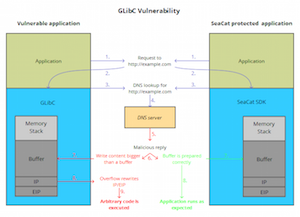
TeskaLabs’ Technology SeaCat Unaffected by GNU C Library Security Vulnerability (CVE-2015-7547)
TeskaLabs, a Prague and London based startup in application security, today affirmed that their core products are not exposed to the GLibC flaw, a highly critical security vulnerability. There is now a rapidly growing number of IoT devices that use Linux as their operating system and inherently GLibC.
Published on February 17, 2016